
Disinfection is an important component of antiseptic practices and is used in all areas of daily life. Disinfection refers to the process of rendering a material incapable of causing infection. It is important to distinguish between disinfection and sterilization. Disinfection aims to reduce the number of germs by a specific factor and is therefore not as intensive as sterilization. The primary purpose of disinfection is to prevent the spread of viruses and other microbes, thus protecting the public from infectious diseases.
What is disinfection?
Disinfection has become a part of many people's lives. The process is primarily associated with medical facilities, which must regularly disinfect all surfaces, utensils, and equipment to prevent potential infections among patients and staff. Since people with weakened immune systems or open wounds often come into contact with each other in these settings, a germ-free environment is vital.
Nowadays, disinfectants are also part of the daily work routine for everyone who earns their living through close-contact services. This group includes, among others, tattoo artists, hairdressers, piercers, and employees in beauty salons. It is especially important for them to use the right disinfectant, one that is suitable for the work and complies with legal requirements.
Disinfectant containing alcohol
Alcohol-based disinfectants typically contain ethanol and isopropanol as ingredients. These emit a strong odor during use but offer a very fast contact time and high efficacy. Thanks to their rapid dissipation, alcohol-based disinfectants are frequently used for hand disinfection, as they do not require re-cleaning after disinfection and are ready for use again after approximately 15 seconds.
Mixtures of 10-30% water and alcohol are excellent disinfectants because the alcohol, thanks to the water, can penetrate the cell walls of bacteria, for example, and then cause the proteins to precipitate. This destroys the bacteria completely, preventing them from causing further harm. However, storage is problematic with alcohol-based disinfectants. According to legal regulations, these must not be transferred to other containers and must be stored securely due to the fire hazard posed by the alcohol.
Furthermore, when used over a large area, a vapor-air mixture can form, which is also highly flammable. Alcohol also tends to react negatively with certain substances. For example, disinfecting chairs in a hair salon can cause the leather to become brittle.
Alcohol-free disinfectants
As an alternative to alcohol-based disinfectants, alcohol-free disinfectants are the main option. These usually contain oxidants and aldehydes, which are responsible for disinfection. Due to their more neutral odor, these products are particularly suitable for disinfecting larger surfaces and objects.
Particularly in the catering industry, schools, and kindergartens, alcohol-free disinfectants are increasingly being used, as surfaces in these settings require more frequent disinfection, leading to a search for gentler alternatives to alcohol. Overall, some alcohol-free disinfectants can be considered less harmful than their alcohol-based counterparts.
What do you need to consider when disinfecting?
One of the most important aspects of disinfection is adhering to the required contact times to kill the maximum number of bacteria, fungi, and viruses. These times can vary depending on the disinfectant and pathogen, so it's advisable to research the specific requirements before disinfection. It's also recommended to use pre-filled (ready-to-use) disinfectants rather than measuring them yourself, which can lead to underdosing or chemical burns from dilution. Before use, always check the expiration date to ensure the disinfectant is still fully effective.
When disinfecting hands, it is important to ensure that the disinfectant is applied to dry hands and not rinsed off with water afterwards. Rinsing can reduce the effectiveness of the disinfectant.
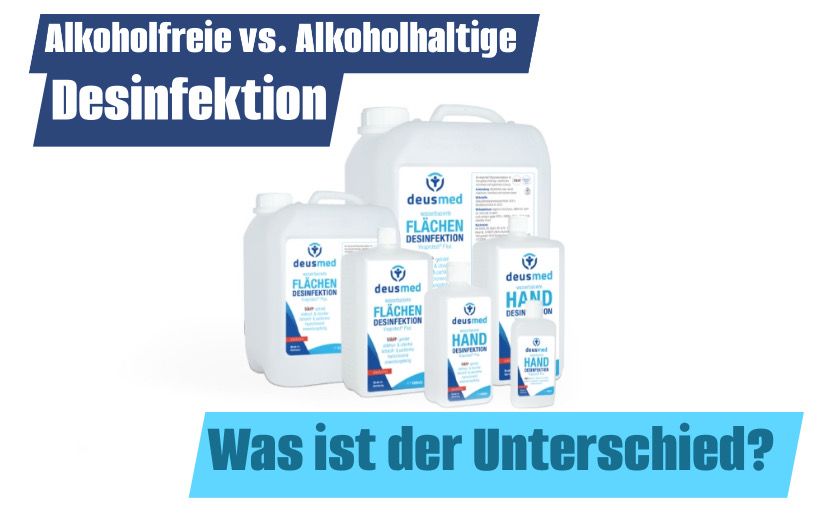
Key facts about alcohol-free disinfection DEUSMED
Alcohol-free, water-based disinfectant for hygienic disinfection. Excellent microbicidal efficacy against a broad spectrum of bacteria, fungi, yeasts, spores, and viruses. VAH-listed, DVG-compliant, and certified according to DIN EN 1500. Ideal for daily use in private and commercial settings. Proven efficacy against non-enveloped and enveloped viruses, including virus families such as Coronaviridae/SARS-CoV-2 and all human and animal influenza viruses.
- Bactericidal (incl. C. difficile), fungicidal, yeasticidal, sporicidal, limited virucidal plus* against enveloped (incl. Sars-CoV-2) and many non-enveloped viruses (incl. Adeno-, Noro-, Rotaviridae) – even in case of heavy organic contamination
- Free from alcohol, chlorine and aldehydes, and free from colorants, fragrances or other additives.
Very high skin compatibility, no fumes, aerosols or odors that irritate mucous membranes. - Excellent environmental tolerance
- Halal-certified & Vegan
- Quality product made in Germany
- Avoiding unnecessary animal suffering
Innovative water-based disinfectant (no chlorine / no alcohol)
which brings many advantages such as:
Our Deusmed hand and surface disinfectant is a true all-rounder.
• No expiration date (officially, as it is water-based)
• Not dangerous goods
• No fire load
• No storage regulations to be observed • No storage regulations to be observed •
• Absolutely gentle on surfaces during application
• Safe for use on all surfaces and textiles
• Absolutely gentle on the skin, even for severely stressed skin, even with frequent daily use
Application
• Can officially be transferred in-house, as it is a sporicide and not a hazardous material
• VAH approved . Highest certification in the disinfectant sector.
• Made in Bavaria / Germany
Our alcohol-free, water-based hand sanitizer is the only water-based hand sanitizer on the market approved by the VAH (Association for Applied Hygiene).
For further information, benefits and spectrum of effects, please see our brochure in the Deusmed media library, accessible via the following link.